
Highland Cattle Facts
Highland cows are an ancient, hardy Scottish cattle breed known for their long, shaggy, waterproof coats and large horns used for foraging in snow. They thrive in harsh, cold climates, and are often kept in folds. They are known for their gentle, docile nature, and long lifespan.
Key Characteristics and Biology
Unique Coat: They possess a double coat consisting of a downy undercoat and a long, oily, waterproof outer layer that protects against snow and rain.
Color Variations: While commonly red or ginger (currently 60% of the population), they can also be black, white, yellow, silver, dun (grey-brown), or brindle.
Horns: Both bulls and cows have long, impressive horns used for protection and, in winter, for foraging through deep snow to find food.
Size: Bulls can weigh up to 900 kg and females weigh up to 600 kg.
Lifespan: They have a long life expectancy, often living up to 20 years.
Behavior and Habitat
"Fold" not Herd: A group of Highland cows is traditionally referred to as a "fold," not a herd because many years ago, the cattle were brought together at night to protect them from the weather and wolves. They were kept in open stone shelters called folds.
Hardy Nature: Originating from the Scottish Highlands, they are highly adaptable, living outside in all seasons and weather conditions.
Grazing Habits: They are efficient grazers that can eat up to 70-75kg of grass per day and will consume vegetation unpalatable to other cattle.
Temperament: They are known to be friendly, docile, and, while protective of their calves, generally non-confrontational.
Interaction with Humans and Environment
Eco-Friendly: They help manage landscapes by grazing on rough terrain and promoting biodiversity.
Meat Production: They are raised for high-quality, lean, and low-cholesterol beef.
Uses: Due to their thick, long hair, they require less back fat, allowing them to thrive in colder climates.
Origin
Ancient Breed: They are one of the oldest registered cattle breeds in the world, with records dating back to 1885.
Regional Origin: Native to the Scottish Highlands and Western Islands of Scotland.
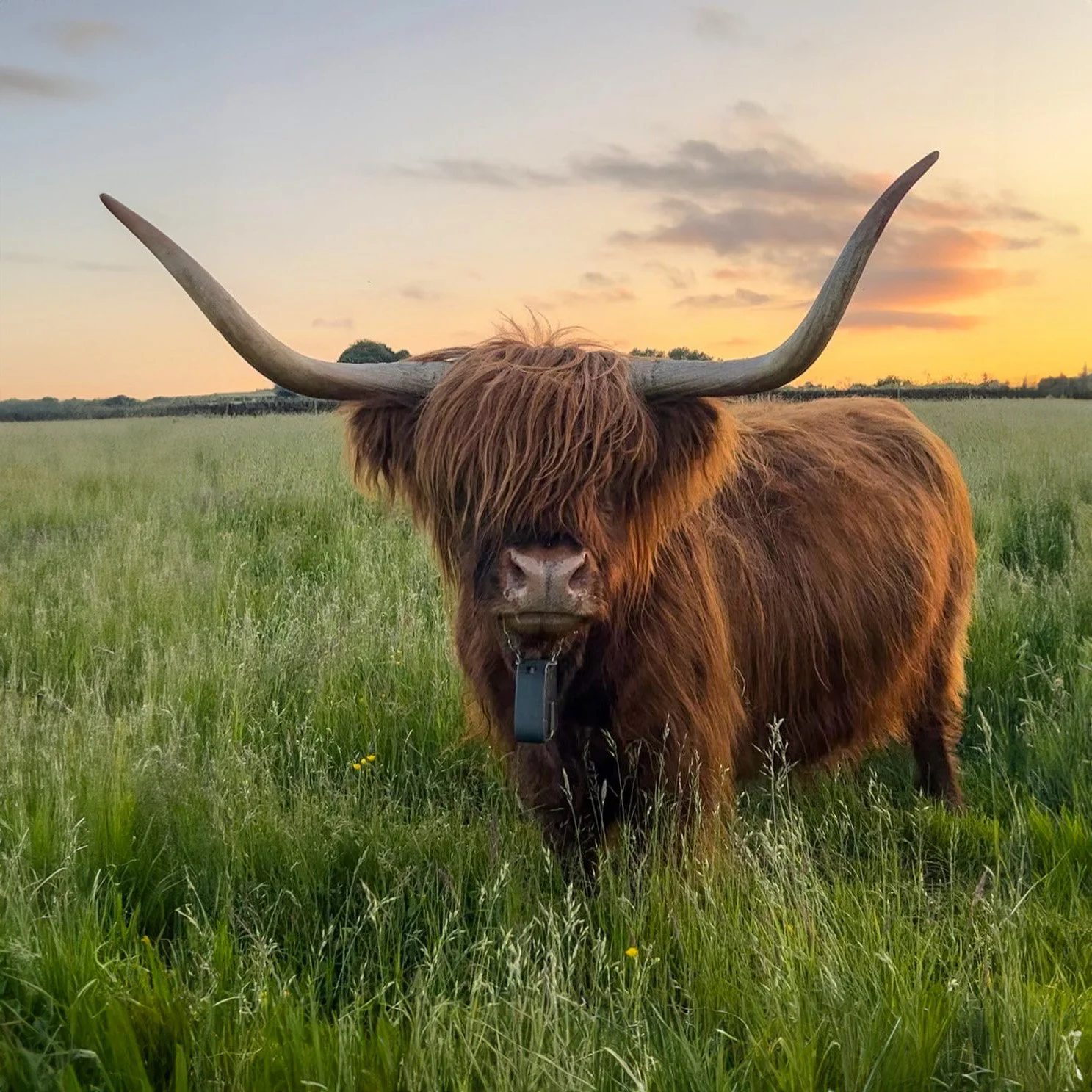
Interesting facts about the Scottish Highland Cow